
PTSD Treatment in Thailand: Inside a Structured Residential Recovery Program
Most people who arrive for residential PTSD treatment have already tried the reasonable things. Weekly therapy. Time off. A holiday that was supposed to help. What brings them to a residential programme is usually the same realisation: the nervous system does not reset on a schedule that fits around a working week.
This article explains how structured residential care for post-traumatic stress actually works — who it suits, what a treatment day contains, how trauma therapy is paced so it does not overwhelm, and what separates a licensed clinical centre from a wellness retreat.
Is Residential Care Right for Your Trauma Recovery?
Outpatient care vs. residential containment
Outpatient therapy is the right starting point for many adults, and for some it is entirely sufficient. One hour a week works when a person has enough stability around that hour, sleep, safety, support, and the capacity to regulate between sessions. Residential care exists for the situations where that scaffolding is missing. Trauma work opens material that does not close neatly at the end of the hour, and when someone returns from a difficult session straight into a demanding job, a stressful household, or an environment that reminds them of what happened, the therapy itself can become destabilising.
Containment is the clinical term for what residential treatment adds. Rather than a single weekly appointment, there is a therapeutic environment: a predictable daily structure, clinicians available between sessions, and the freedom to have a difficult afternoon without having to hold everything together for anyone else.
Residential care is generally worth considering when:
- Symptoms interfere with daily functioning, work, parenting, relationships, or basic routine
- Outpatient therapy has stalled, or each session is followed by days of destabilisation
- Sleep has been broken for months rather than weeks
- Alcohol, medication or other substances have become the main way of managing symptoms
- Avoidance has narrowed life to a small number of places and situations that feel tolerable
- There is a history of repeated or prolonged trauma rather than a single event
*None of these on their own decide the matter. They are patterns that tend to indicate a person needs more support around therapy than one weekly hour can provide.
When rest and holidays no longer reset the nervous system
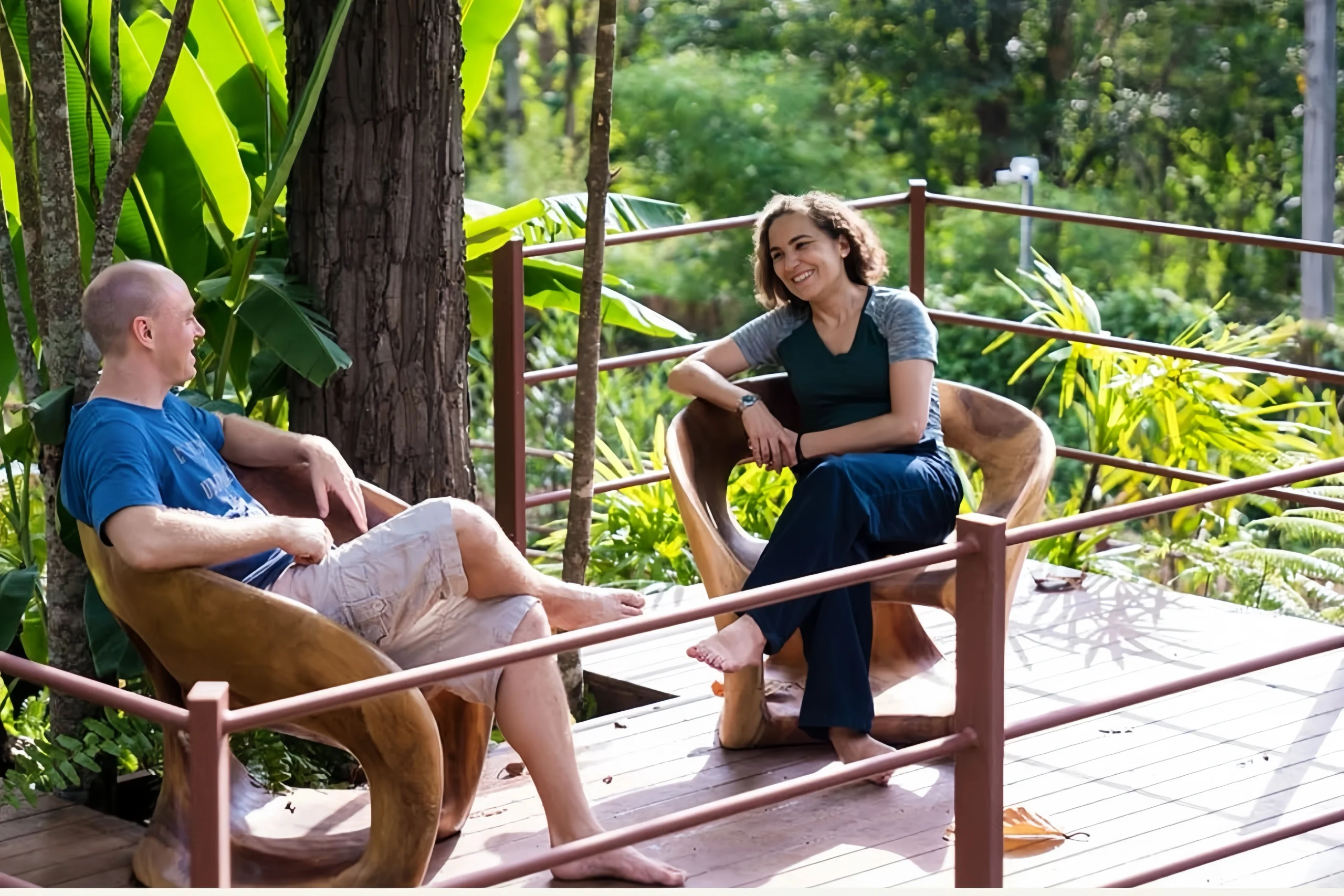
Many people arrive describing themselves as mentally exhausted rather than traumatised. The vocabulary of trauma does not always feel like it belongs to them, especially if what happened was prolonged and ordinary-seeming rather than a single dramatic event.
The pattern is recognisable, though it is not always identified as trauma. The body remains on alert long after the danger has passed, so a holiday helps for a few days before the tension returns within a week of getting home. Sleep is disturbed or unrefreshing. Concentration and memory have deteriorated, largely because attention keeps drifting towards possible threats, and ordinary interactions take more effort than they should. Certain sounds, places, or remarks provoke a reaction out of keeping with the situation, while at other times there is little reaction at all, only a sense of detachment from daily life and from the people in it.
This is not a failure of willpower or self-care. A nervous system held in a prolonged state of threat response does not stand down simply because the calendar says you are on leave. Rest removes demand; it does not, on its own, retrain a threat response that has become the default setting. That is what structured treatment is for.
It is also worth naming why these presentations are so often missed. People whose trauma was prolonged rather than dramatic, a long period of caregiving, a hostile workplace, an unsafe relationship, years of high-stakes professional exposure frequently do not consider PTSD as a plausible explanation for how they feel. They describe burnout, low mood, or simply being run down, and are sometimes treated for those alone. A proper clinical assessment is what distinguishes exhaustion from an unrecognised post-traumatic stress presentation, and the distinction changes what treatment is likely to help.
A Comprehensive Approach to Trauma & Mental Health Care
Integrating diverse modalities rather than relying on one model
No single therapy model fits every trauma presentation. A programme built entirely around one modality will fit some people well and leave others stuck, which is why our clinical team draws on a range of psychotherapy approaches and matches them to the person rather than the other way round.
In practice, an integrated programme may draw on several of the following, chosen during assessment and revised as treatment progresses:
- Trauma-focused cognitive therapy: addressing the beliefs about safety, blame and self-worth that form around traumatic experience
- EMDR: structured processing of specific traumatic memories to reduce their intensity and intrusiveness
- Somatic and body-based work: targeting the physiological side of the stress response that talking alone does not always reach
- Narrative Therapy: externalising problems, re-authoring personal stories and drawing on preferred identities to loosen the hold of trauma
- Schema and attachment-focused therapy: used where trauma is developmental and long-standing rather than tied to one incident
- Group psychoeducation: understanding what trauma does to the brain and body, which for many people is the point where self-blame begins to loosen
What matters more than the list of modalities is the framework holding them together. Our treatment framework incorporates clinical principles to ensure safety and trust; read our guide on what trauma-informed care actually means. Applied properly, that framework governs pacing, consent, and the order in which things are approached: stabilisation and regulation are established before traumatic material is processed in any depth.
Targeted symptom management and adjunct tools
Alongside core psychotherapy, specific tools can be used to target specific symptoms. VR exposure therapy allows graded, controlled exposure to trauma-related cues within a clinical setting, with the therapist adjusting intensity in real time and stopping when the person’s arousal exceeds a workable window. It is used as a structured component of trauma therapy, not as a standalone fix.
Clinical note: pacing protects progress.
Trauma treatment is not a race to process the worst memory as quickly as possible. Processing material before someone has the regulation skills to tolerate it can intensify symptoms rather than resolve them.
A properly structured programme follows a sequence: stabilisation and safety first, then regulation skills, then trauma processing, then integration and transition planning. Expect the first phase of a residential stay to focus on sleep, routine, nervous system settling and building a therapeutic relationship that groundwork is treatment, not a delay before it.
If you are currently in crisis or having thoughts of harming yourself, please contact your local emergency services or a crisis line now. Residential treatment is planned care and is not a substitute for emergency support.
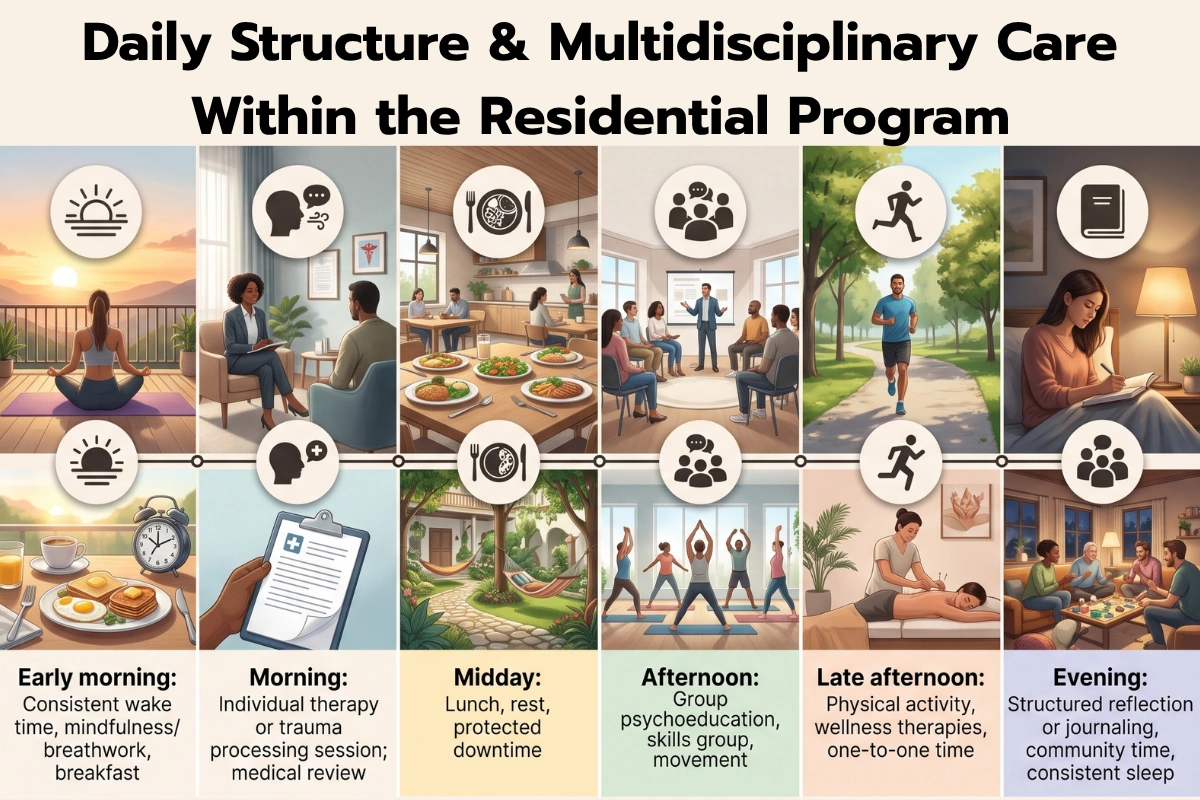
Daily Structure & Multidisciplinary Care Within the Residential Program
Structure is itself therapeutic. A nervous system that has spent months in unpredictability responds to a day it can anticipate. In our residential rehab program, a typical weekday balances clinical work, physical regulation, and unstructured recovery time in deliberate proportions.
Sessions are scheduled with recovery time deliberately built around them. The quiet hour after a demanding therapy session is part of the clinical design, not idle time in the timetable.
The timetable is also multidisciplinary by design. Over a week, a client may work with an individual therapist, a psychiatrist, nursing staff, group facilitators and movement or bodywork practitioners — all of whom meet as a team to review progress. That coordination is one of the clearest practical differences between residential treatment and assembling the same services separately at home, where a therapist, a doctor and a yoga class rarely have any way of talking to one another about the same person.
Somatic regulation and stress recovery
Post-traumatic stress lives in the body as much as in memory, holding muscle tension, disrupted breathing, poor sleep, and a startle response that fires before conscious thought. Talking therapy alone does not always reach it.
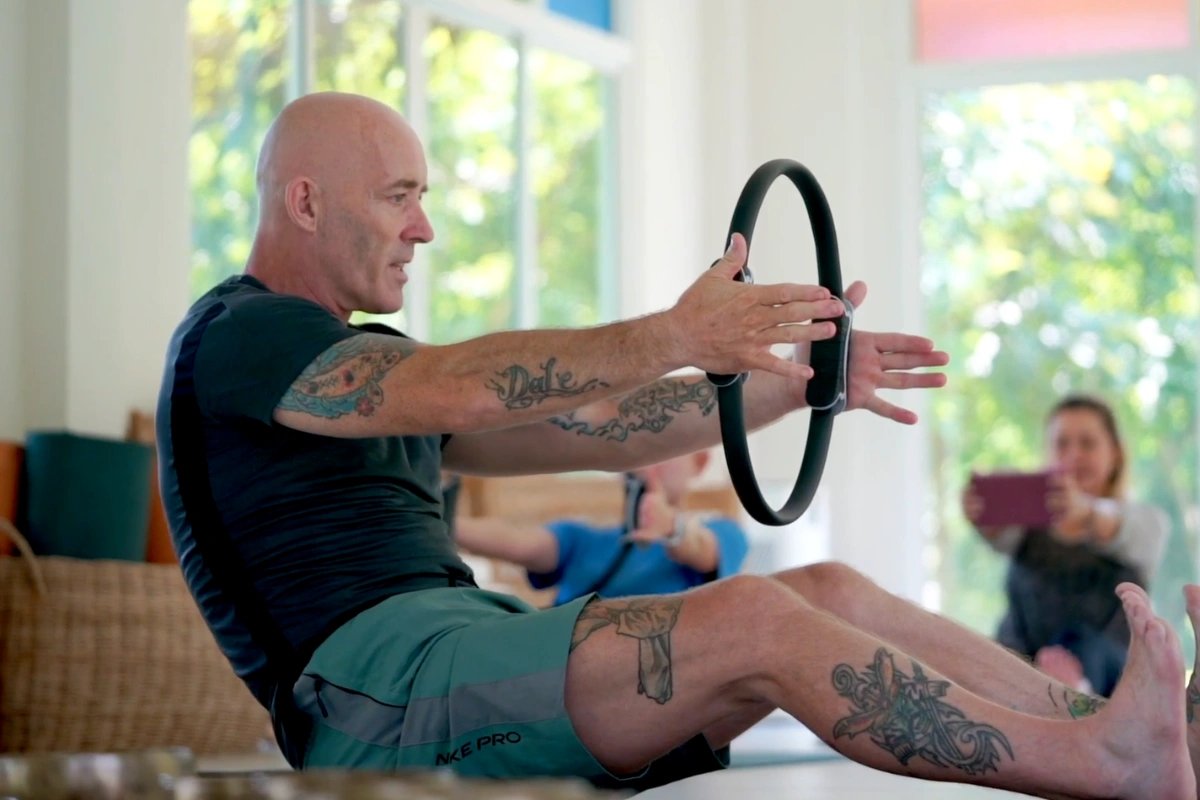
Body-based work runs in parallel throughout the programme. Our holistic wellness therapy supports downregulation of a chronically activated stress response through breathwork, massage and restorative practice, while controlled, precise movement in our Pilates studio helps rebuild the sense of physical safety and body awareness that trauma often erodes. For many people, learning that they can influence their own physiological state is the first concrete evidence that recovery is possible.
Differentiating Clinical Treatment Centres from a Wellness Retreat
Why clinical oversight matters for trauma?
A Thailand mental health retreat can be a genuinely restorative experience. What it generally is not, is a clinical treatment setting and for post-traumatic stress, that distinction carries real weight. Trauma treatment can temporarily intensify symptoms before it improves them. Sleep can worsen mid-programme. Dissociation, flashbacks and mood instability can surface. A licensed clinical centre is equipped to hold those responses safely, adjust the treatment plan, and involve medical staff when needed. A retreat without clinical infrastructure may have to end a guest’s stay at exactly the point where they most need support.
What to verify before you book
| Licensed clinical centre | Standard wellness retreat |
| Registered with health authorities | Often registered as hospitality or tourism |
| Psychiatrist and medical oversight | Usually no medical staff |
| 24/7 nursing presence | Daytime facilitators only |
| Clinical pre-admission assessment | Booking form or short questionnaire |
| Licensed psychologists and therapists | Coaches, teachers or practitioners |
| Medication management available | Not permitted or not available |
| Structured, documented aftercare | Ends at check-out |
Ask directly about licensing, clinical credentials, overnight cover, and what happens if someone becomes acutely unwell. Ask also about the pre-admission assessment: a centre that accepts a booking for PTSD treatment without a clinical conversation first is not assessing whether the programme is safe or appropriate for you.
Frequently Asked Questions
Sustaining Progress: Long-Term Transition Planning
Maintaining gains after returning home
Discharge is a transition, not a finish line. Gains made inside a contained environment need deliberate support when someone returns to the setting where their symptoms developed.
A structured aftercare program provides continued remote contact with the clinical team, online groups, and a written continuing-care plan covering ongoing therapy, sleep and routine, relapse or setback warning signs, and who to contact when things become difficult. Planning for it should begin during treatment, not on the final day.
Two practical parts of that plan are worth raising early. The first is returning to work how much, how soon, and what is realistic in the first month, which is a clinical question as much as a professional one. The second is the people around you. Family and partners often want to help and have no idea how; involving them, with the clients consent, in understanding triggers, pacing and what recovery actually looks like tends to make the transition home considerably steadier.
Speak with our team in Chiang Mai
If you are weighing up residential PTSD treatment in Thailand for yourself or someone close to you, the useful next step is a clinical conversation rather than a brochure. Our team can talk through your situation, whether residential care is appropriate, and what a programme would realistically involve. You can reach us through our Chiang Mai rehab center.