
Cost of Alcohol Rehab in Thailand: A Clear, Line-by-Line 2026 Price Breakdown
If you have spent an evening comparing the cost of alcohol rehab in Thailand across a dozen websites, you have probably noticed the same thing everyone else does: the numbers are all over the place, and almost none of them explain what is actually included in the the price. Two centres can quote very different weekly fees for what looks, on the surface, like the same 28-day programme.
The difference is rarely marketing. It is usually clinically relevant how much medical supervision is built into the first week, or how many hours of individual therapy you receive, and how many staff are on site overnight. This guide breaks down what drives the price, what a properly all-inclusive fee should cover, what sits outside it, and the questions to ask before you send anyone a deposit.
Why Published Prices for Alcohol Rehab in Thailand Vary Widely
Key factors driving price differences
Four variables account for most of the gap between one quote and another
- Length of stay. Programmes are typically priced in blocks of 28, 60 or 90 days. Longer stays usually carry a lower weekly rate, but the total commitment is higher. Clinical need, not budget should set this number, and a good admissions team will tell you honestly if 28 days is unlikely to be enough for your situation.
- Medical detox requirements. This is the single largest swing factor. A guest with a long daily drinking history, prior withdrawal seizures, or co-occurring medical conditions requires closer monitoring, more frequent physician review, and prescribed withdrawal medication. That care is resource-intensive and priced accordingly. Someone who has already completed a supervised detox in their home country before flying may enter at a different rate. Understanding the line between social consumption and dependence is crucial to learn more about when social drinking becomes harmful.
- Staffing ratios and credentials. A facility with round-the-clock nurses, a visiting psychiatrist and internationally credentialed therapists carries a payroll that a peer-support-only house does not. Ask for the ratio of clinical staff to guests, not just the headcount.
- Accommodation standard. Private ensuite versus shared rooms, and the level of on-site facilities, form the smallest clinically meaningful part of the fee but often the most visible one in photographs.
Understanding affordable drug rehab in Thailand without compromising clinical quality
Thailand has become a recognised destination for addiction treatment partly because operating costs allow a level of staffing and stay length that would be considerably more expensive in Australia, the UK, the Gulf or North America. That is a legitimate reason for a lower price. It is not a reason for a lower standard. The distinction to hold onto is this: affordable drug rehab in Thailand should mean better value per treatment day, not fewer clinical safeguards. When a quote sits far below the market, ask specifically what has been removed. Common omissions are a doctor on call overnight, individual therapy sessions (replaced entirely by group work), and any structured aftercare after discharge.
Warning signs worth taking seriously:
- No named medical director, or no doctor available outside office hours
- Detox described only as “natural”, “holistic” or “medication-free” with no medical oversight
- Pressure to pay in full immediately, with no written service agreement
- No clear licensing or registration you can verify with Thai health authorities
- Therapy delivered only by peers in recovery, with no licensed clinicians in the team
What an All-Inclusive Treatment Fee Covers
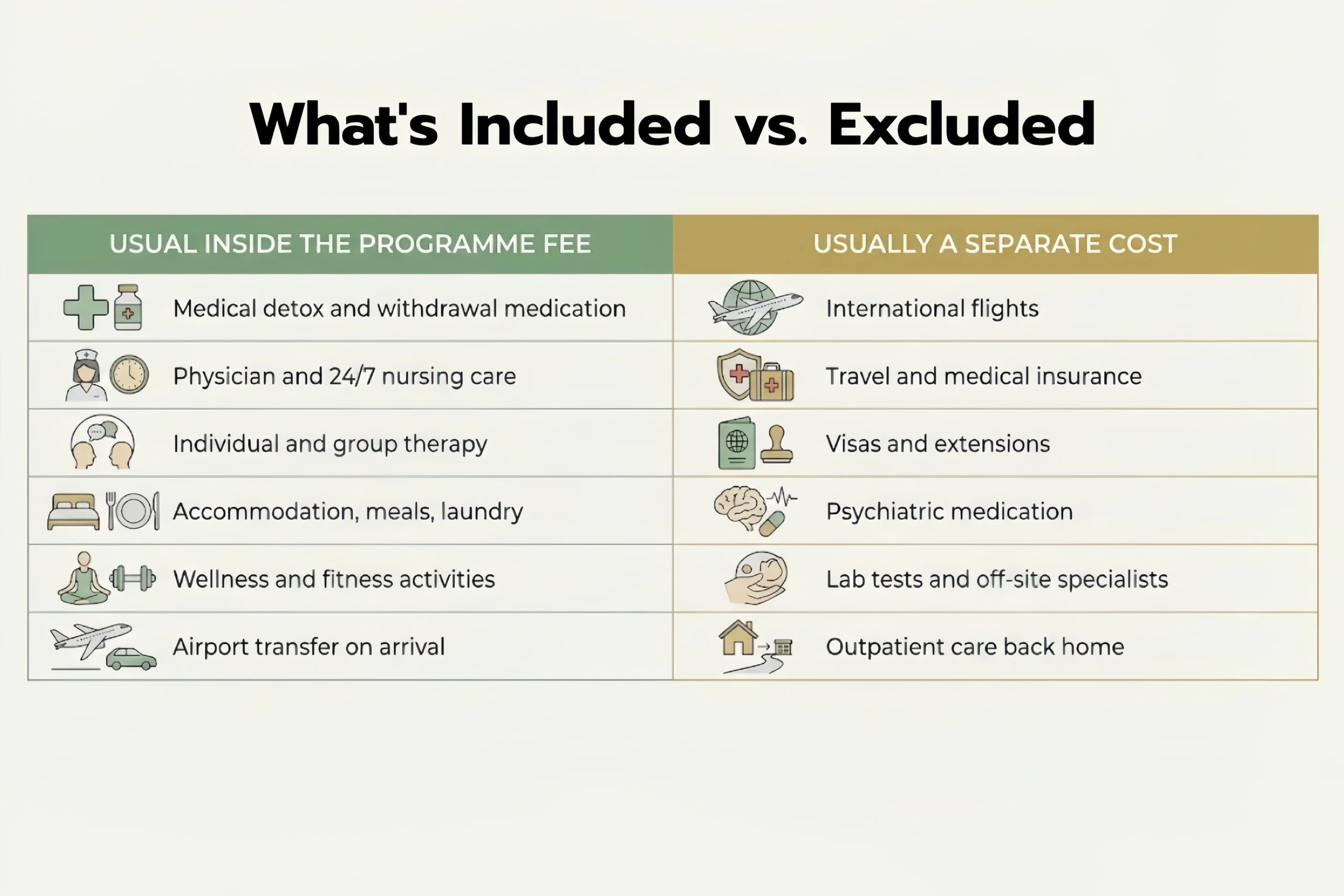
At credible alcohol rehab facilities, the quoted fee should be a genuine programme fee, not a room rate with clinical services billed on top. Here is what a complete inclusion list looks like.
Medically supervised withdrawal management
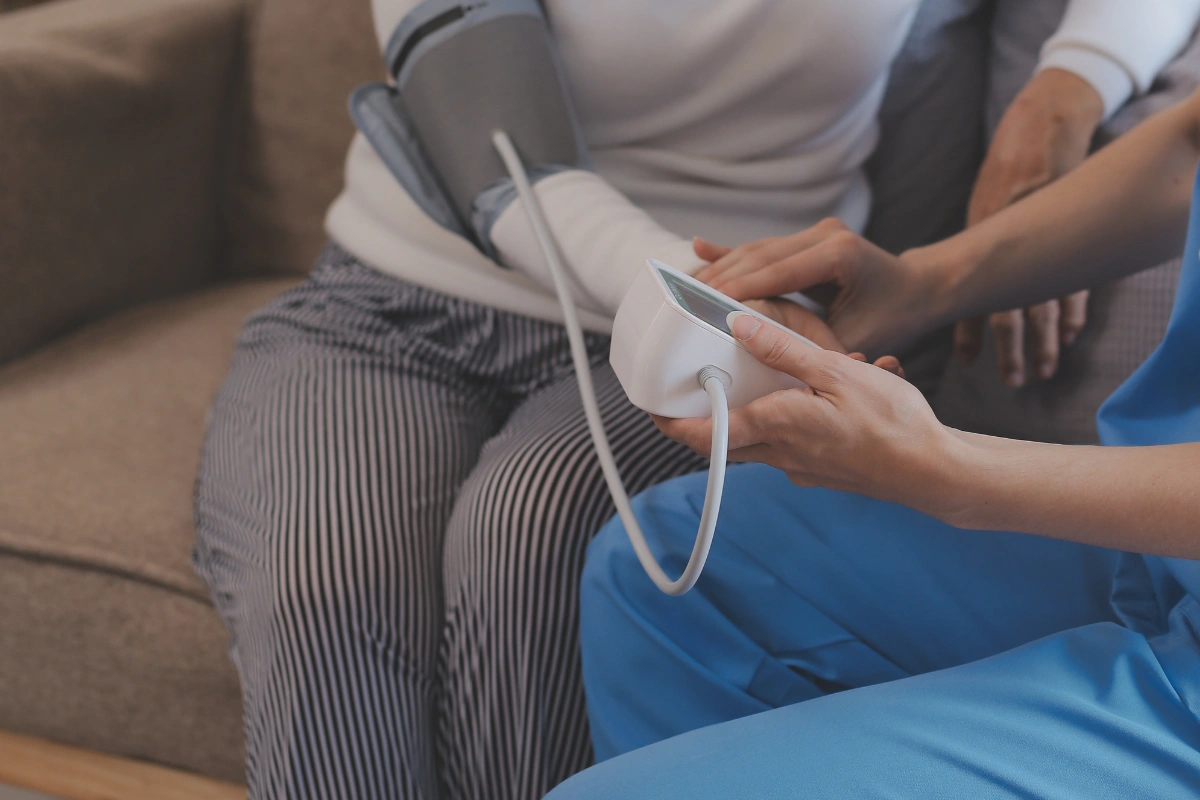
The first phase of treatment is stabilisation. In our dedicated detox program in Thailand, withdrawal is managed with physician oversight, regular observation of vital signs, symptom-triggered medication where clinically indicated, and nutritional and vitamin support. This should be part of the programme fee, not a separate line item that appears after arrival.
A balanced therapeutic schedule
The clinical core of the programme is the weekly timetable: individual sessions with an assigned therapist, structured group therapy sessions, and evidence-based modalities such as cognitive behavioural therapy, motivational interviewing and relapse-prevention planning. When comparing quotes, count the hours. “Therapy included” means very little; “three individual sessions per week plus daily process groups” means something you can actually compare.

On-site residential care and amenities
Accommodation, all meals, laundry, fitness and wellness activities, and 24/7 nursing presence should be inside the fee at modern alcohol rehab facilities. Overnight nursing cover in particular is not a luxury; it is what allows a change in someone’s condition at 3 a.m. to be recognised and acted on.
Transition support after discharge
Treatment does not end at the airport. An included aftercare program, continued contact, online groups, and a written continuing-care plan is one of the strongest predictors of whether the gains made in residential treatment hold. If aftercare is an optional paid add-on, factor that into your comparison.
Additional Costs to Budget Outside the Base Fee
Even a genuinely all-inclusive programme cannot cover everything. Budget for these separately so there are no surprises.
Travel, insurance, visas and personal expenses
- Flights for the guest, and for a family member if someone is accompanying them
- Travel and medical insurance check explicitly whether addiction treatment and pre-existing conditions are covered, as many policies exclude both
- Visa arrangements appropriate to the length of stay, including any extension required for a 60- or 90-day programme
- Personal spending toiletries, clothing, phone and data, and any post-programme accommodation
- Currency and card fees on international transfers, which are easy to overlook on a large payment
Specialist medical services and post-discharge planning
- Psychiatric assessment and any prescribed psychiatric medication, where a co-occurring condition is identified
- Laboratory testing, imaging, or off-site specialist consultations
- Dental or general medical care unrelated to addiction treatment
- Outpatient therapy in your home country after discharge, arranged as part of your continuing-care plan
Ask for these to be listed explicitly in writing. A centre that can tell you in advance what is not included is usually the one being straight with you about what is.
⚠ MEDICAL SAFETY WARNING: DO NOT STOP DRINKING SUDDENLY WITHOUT MEDICAL SUPERVISION
- For someone who is physically dependent on alcohol, stopping abruptly can be life-threatening. Unlike most other substances, unsupervised alcohol withdrawal carries a genuine risk of death.
- Withdrawal seizures can occur within roughly 6 to 48 hours of the last drink. Delirium Tremens (DT), marked by severe confusion, agitation, hallucinations, fever, sweating and dangerously unstable heart rate and blood pressure, typically emerges around 48 to 72 hours in, and is a medical emergency. Untreated, it carries a substantial risk of death; with prompt medical treatment, that risk falls dramatically. Risk is higher for anyone with a long history of heavy daily drinking, previous withdrawal seizures or DT, or other significant medical conditions.
- Medical detox must come first. Psychological therapy cannot safely or effectively begin until withdrawal has been medically stabilised. A brain in acute withdrawal cannot retain or apply what is discussed in a therapy room. Any programme that offers counselling to a physically dependent drinker without first establishing supervised detox is putting that person at risk.
If someone is currently experiencing confusion, seizures, hallucinations or a high fever during withdrawal, seek emergency medical care immediately.
Frequently Asked Questions
Getting an Accurate Quote for Your Needs
No honest centre can price your treatment from a web page alone. An accurate quote follows a clinical assessment of drinking history, medical history, medications, mental health, and previous treatment episodes.
Key questions to ask admissions teams before placing a deposit
Use this as a checklist on every call you make:
- What exactly is included in the quoted fee, and what is billed separately? Ask for it in writing.
- Is medical detox included, and who supervises it? Get the doctor’s role and availability, including overnight and weekends.
- What are the nursing and therapist-to-guest ratios?
- How many individual therapy hours per week will I receive?
- What are the credentials and licensing of the facility and clinical team?
- What happens if I need to extend my stay? Ask for the extension rate up front.
- What is the refund and cancellation policy if plans change or an assessment finds the programme unsuitable?
- Is aftercare included, for how long, and in what format?
- Can you support psychiatric care if a co-occurring condition is identified during treatment?
- How is family involved, and is family therapy or communication included?
If an admissions team is reluctant to answer any of these in writing, treat that as information about the centre.
Speak with our clinical admissions team
Every case is different, and a realistic figure requires a proper conversation about clinical needs. Our admissions specialists in Chiang Mai can walk you through the assessment, explain exactly what your programme fee would cover, and give you a written breakdown before any commitment is made. You can reach the team through our contact page.
*This article is for general information and does not constitute medical advice. Alcohol withdrawal can be dangerous; always consult a qualified medical professional before stopping or reducing alcohol intake.