

Process Addiction Treatment in Thailand: Restoring Balance to Compulsive Behaviors
Process addictions gambling, gaming, compulsive shopping, sexual behaviour, work, screen use follow much of the same reward and craving machinery as substance addiction, but they present a problem substance treatment does not have to solve. You cannot ask someone to give up their phone, their income, or eating. Treatment has to end with a workable relationship to the behaviour, not simply its removal.
This guide covers how behavioural addictions are formally recognised, why the treatment goal is usually boundaries rather than blanket abstinence, how process addiction is sequenced alongside substance misuse, and what the research actually shows about the fear that treating one addiction just creates another.
Understanding Process and Behavioural Addictions
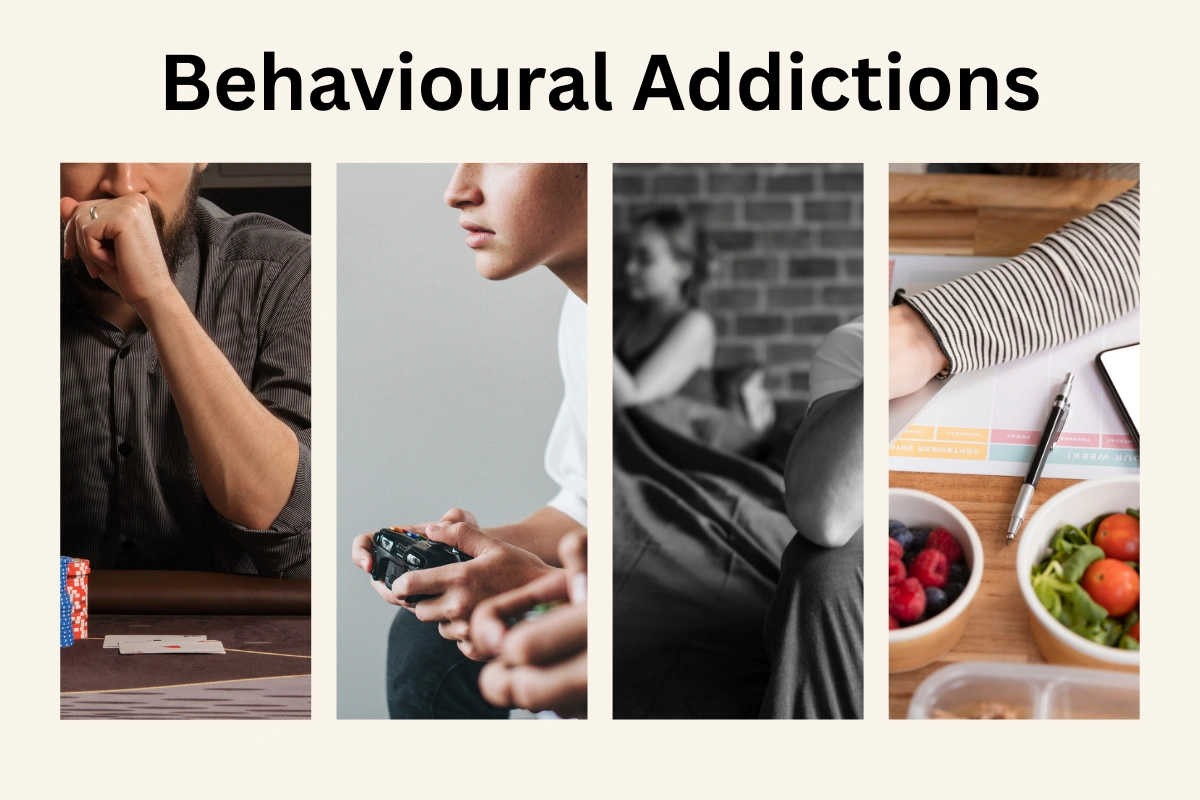
What the diagnostic manuals recognise and what they don’t
Formal recognition of behavioural addiction is narrower than everyday usage suggests, and knowing the difference matters when you are assessing whether a treatment centre is being precise or simply marketing.
| Presentation | Diagnostic status |
| Gambling disorder | Formally classified as an addictive disorder in both DSM-5- TR and ICD-11 |
| Gaming disorder | Recognised in ICD-11; in DSM-5-TR it remains a condition for further study |
| Compulsive sexual behaviour | Classified in ICD-11 as an impulse control disorder, not an addiction |
| Compulsive shopping, work, exercise, screen and food-related patterns | No standalone addiction diagnosis; treated according to presentation and impairment |
Gambling disorder is the most thoroughly studied of the group and the one with the clearest treatment evidence base. It also carries risks that are easy to underestimate financial collapse, concealment that damages relationships, and elevated rates of depression and suicidality. Gambling disorder requires specialised behavioural interventions rather than willpower alone explore our in-depth article on treating gambling addiction in Thailand.
The absence of a diagnostic code does not mean the absence of a clinical problem. Impairment is what determines whether treatment is warranted: loss of control despite intent to stop, escalating time or money, concealment, and continued engagement despite clear harm to work, health, finances or relationships.
Why behavioural addiction usually means boundaries, not total abstinence
Substance treatment can generally define success as abstinence. Most process addictions cannot. A person with compulsive shopping still has to buy things; someone with problematic screen use still has to work online; disordered eating patterns cannot be resolved by not eating.
Gambling is the exception that proves the rule for gambling disorders, abstinence is usually the clinical goal, because there is no necessary role for the behaviour in ordinary life. For most other process addictions, treatment aims at controlled, intentional engagement: clear rules the person sets with their clinician, structural barriers that make impulsive engagement harder, and the skills to notice and tolerate an urge without acting on it.
This makes behavioural treatment more demanding in one specific way. An abstinence-based plan has an unambiguous line. A boundary-based plan requires ongoing judgement, honest self-monitoring, and regular review which is precisely why it works better with structure and clinical support than alone.
Addressing Co-Occurring Behavioural Patterns and Substance Misuse
The sequencing rule: stabilise the body first
Where a process addiction sits alongside substance dependence, the order of treatment is not a matter of preference. Physical dependence is stabilised first, through medically supervised detox in Thailand, before any intensive behavioural work begins.
There are two reasons. The first is safety: withdrawal from alcohol or benzodiazepines can be medically dangerous and must be managed with clinical supervision. The second is effectiveness, functional analysis, urge management and boundary-setting all require working attention, memory and emotional regulation. A person in acute withdrawal has none of those reliably available, and behavioural work started too early tends to be repeated later.
Sequencing at a glance
- Medical stabilisation: supervised detox where physical dependence is present, with sleep and nutrition restored.
- Assessment and functional analysis: mapping what the behaviour does for the person before trying to remove it.
- Active behavioural treatment: therapy, skills, boundary design and structural barriers.
- Integration and transition planning: testing the plan against real life before discharge.
*Never stop drinking alcohol or taking prescribed benzodiazepines abruptly without medical advice — abrupt withdrawal from either can cause seizures and other life-threatening complications.
Dual-diagnosis care in a residential setting
Process addictions rarely present alone. Depression, anxiety, ADHD, trauma histories and substance misuse all appear frequently alongside them, and each affects how the compulsive behaviour functions. Screen use that is mainly avoidance of a depressive state is a different clinical problem from screen use driven by ADHD-related stimulation seeking, even where the outward behaviour looks identical.
A professional drug rehabilitation program in Thailand equipped for dual diagnosis treats these together rather than in sequence. Psychiatric review runs alongside psychological therapy; medication, where indicated, is managed by the same team designing the behavioural plan. Treating one condition and referring the other onwards is where a great many relapses originate.
Evidence-Based Treatment at The Beekeeper House
Functional analysis and a tailored care plan
Effective behavioural treatment starts by understanding what the behaviour is doing for the person. Functional analysis maps each episode across three points: what preceded it, what the behaviour provided, and what followed it.
The pattern that emerges is usually specific and often surprising to the person themselves gambling that reliably follows conflict at home, gaming that begins when a work deadline creates anxiety, spending that arrives with loneliness in the evening. Once the function is visible, the treatment plan can address it directly: alternative regulation strategies for what the behaviour was providing, structural barriers at the moments of highest risk, and therapy addressing the underlying driver.
At The Beekeeper House, a licensed rehab center in Thailand, that analysis feeds a written care plan reviewed and revised throughout the stay rather than fixed at admission. Behavioural patterns reveal themselves gradually; a plan that cannot change with them is not much use.

Group work and peer accountability
Concealment is a defining feature of process addiction. Because there is no substance to detect and no physical withdrawal to observe, gambling or compulsive spending can continue for years without anyone knowing and the secrecy itself compounds the shame that drives the behaviour.
Structured group therapy sessions interrupt that cycle in a way individual work alone cannot. Describing the behaviour to people who recognise it removes much of its power, and peers are notably quicker than clinicians to identify minimisation and rationalisation, having used the same reasoning themselves. Group work is balanced with individual therapy throughout: the group provides accountability and normalisation, while individual sessions handle the personal history underneath.
Somatic grounding and emotional regulation
Urges are physical events before they are decisions restlessness, tension, a rise in heart rate, a narrowing of attention. People who can recognise those signals early have a window in which to act; people who cannot tend to find themselves already engaged in the behaviour before any conscious choice registers.
Our holistic wellness therapy builds that interoceptive awareness through breathwork, bodywork and structured relaxation practice, alongside the practical skill of tolerating an urge as it rises and falls without acting on it. This is not an alternative to psychological treatment; it is what makes the psychological work usable in the moments that actually matter.
Research Breakdown: Debunking Addiction Substitution Myths
What the data shows about concurrent recovery vs. addiction transfer
“Addiction transfers” the belief that resolving one addiction inevitably produces another is widely repeated and only partly supported. It also does real harm when it discourages people from addressing more than one problem at a time.
A 2023 study of 185 people in recovery from gambling disorder examined this directly. Substitution alone occurred in about 16% of participants, while roughly 24% showed concurrent recovery reducing another addictive behaviour at the same time as gambling with the remainder showing mixed or neither pattern. In other words, improving alongside gambling recovery was more common than substituting, not less.
Evidence from substance treatment points the same way. A meta-analysis of 19 randomised controlled trials found that offering smoking cessation during addiction treatment was associated with a 25% increased likelihood of long-term abstinence from alcohol and illicit drugs the opposite of what the substitution model predicts.
The honest reading is this: substitution is real but is a minority outcome, and it is not an automatic consequence of recovery. It is a risk to be assessed and planned for, not a reason to leave a second problem untreated.
Identifying high-risk profiles during pre-admission evaluation
What the research does usefully identify is who is more likely to substitute. In the gambling study, participants who substituted showed higher levels of emotion dysregulation, greater impulsivity particularly acting rashly under distress, more adverse childhood experiences, and more maladaptive coping. The most commonly endorsed reason for taking up a substitute behaviour was straightforward: it served as an alternative way of coping.
That is a clinically actionable finding. If the behaviour is doing a coping job and nothing replaces that job, something else will fill it. A thorough pre-admission evaluation should therefore screen not only for the presenting addiction but for the full range of compulsive behaviours, emotion regulation capacity, impulsivity, trauma history and family history and the resulting plan should build regulation skills deliberately rather than assume they will appear once the behaviour stops.
Next Steps for Integrated Behavioural Recovery
A boundary plan that works inside a residential setting has not yet been tested. The environment that made the behaviour possible: the same phone, the same accounts, the same commute, the same stressors is waiting at home.
Planning for that begins during treatment and continues through a structured aftercare program: written personal rules for the behaviour, practical barriers such as self-exclusion registers, blocking software or delegated financial controls, an early-warning list of the states and situations that precede an episode, a review schedule, and a named person to contact when a boundary starts to slip. Setbacks are treated as information for revising the plan, not as evidence that treatment failed.
Where the behaviour has caused financial or relational damage as gambling and compulsive spending usually have repair belongs in the plan too. Debt does not resolve itself while someone is in treatment, and returning home to unopened correspondence is a well-recognised relapse trigger. Practical steps such as delegated financial oversight during early recovery, a realistic repayment approach, and honest conversations with the people affected are more protective than any promise made in the first week home. Involving family, with the person’s consent, tends to make those arrangements hold.
Frequently Asked Questions
Unlock Your Life, Restore Your Balance: Talk to the Experts at Beekeeper House
If a compulsive behaviour has taken more time, money or honesty than you intended with or without a substance problem alongside it a clinical assessment is the practical starting point. Our admissions team can discuss what the behaviour looks like now, whether residential treatment is appropriate, and what a plan would involve. You can reach us through our Chiang Mai center page.